The pimple is gone. But something has been left behind.
Maybe it is a brown spot. Maybe it is red. Maybe there is a small depression in the skin.
We often call all of these ‘acne scars.’ Medically, they are not the same thing. And understanding the difference matters because an acne mark and an acne scar usually need very different treatment approaches.
Acne Marks Are Not Always Scars
After acne settles, inflammation can leave behind a flat area of discolouration. Depending on the skin and the type of inflammation, this may appear brown, grey-brown, red or pink.
These flat areas are often what people mean when they say, ‘My acne has left scars.’ But if the skin surface is still flat and only the colour has changed, you may be dealing with post-acne pigmentation or post-inflammatory colour change rather than a true structural scar.
What Is a True Acne Scar?
A true acne scar involves a change in the structure or texture of the skin. During healing, the skin may produce too little collagen, leaving a depression, or too much collagen, creating a raised scar.
This is why acne scars can look very different from one person to another.
Common Types of Depressed Acne Scars
Ice-pick scars
These are narrow but relatively deep depressions. They may look like tiny openings or punctures extending into the skin.
Boxcar scars
These are broader depressions with more defined edges. They may be shallow or deeper depending on the individual scar.
Rolling scars
These tend to be wider and shallower. When multiple rolling scars are present, the skin can have an uneven or wave-like appearance.
A single person can have more than one scar type at the same time, which is one reason acne-scar treatment often requires a combination approach.
The Easiest Way to Think About It
- Acne mark
- Primarily a colour problem.
- Acne scar
- Primarily a structure and texture problem.
And sometimes, of course, a patient has both. That distinction changes the treatment strategy completely.
Why Do Acne Scars Develop?
Deeper inflammatory acne, particularly nodules and cysts, is more likely to damage surrounding tissue and leave scarring.
Picking, squeezing or repeatedly manipulating acne can also increase inflammation and the risk of scarring. Genetics and the way an individual’s skin heals may also influence whether scars develop.
This is one reason controlling active acne early matters. Treating scars while new inflammatory acne continues to appear is often working backwards.
Why One “Acne Scar Treatment” Cannot Work for Everyone
Imagine three people.
One has mainly brown post-acne marks. Another has deep ice-pick scars. The third has rolling scars tethered beneath the skin.
All three may walk into a clinic saying: “I need treatment for acne scars.” But they do not have the same problem, and they should not automatically receive the same procedure.
A dermatologist evaluates the type, depth and distribution of scars, the patient’s skin type, whether active acne is still present, previous treatments and the risk of pigmentation before planning treatment.
What Treatments May Be Used?
There is no single procedure that is best for every acne scar. Depending on the scar pattern and skin, a dermatologist may consider treatments such as:
- Microneedling
- Radiofrequency microneedling
- Subcision
- Chemical peels
- Laser procedures
- Selected resurfacing treatments
- Fillers in appropriate depressed scars
- Other scar-specific techniques
Combination treatment is common because many patients have a mixture of scar types.
What About Acne Marks?
Flat post-acne pigmentation is approached differently. Depending on the skin and pigmentation pattern, management may involve:
- Daily sun protection
- Prescription or dermatologist-selected topical treatment
- Chemical peels in suitable patients
- Selected laser or light-based procedures
- Most importantly, controlling ongoing acne
Using an aggressive scar procedure when the problem is primarily pigmentation can expose the skin to unnecessary treatment. Diagnosis comes first.
Can Acne Scars Disappear Completely?
True depressed acne scars generally do not simply disappear on their own.
Dermatological treatments can often make them less visible and improve overall skin texture, but treatment should be discussed in terms of improvement rather than promising perfectly scar-free skin.
The amount of improvement possible depends on the type and depth of the scar, skin type, treatment chosen and individual healing response.
Treat the Acne Before Chasing the Scar
If active acne is still producing new inflamed lesions, the first priority is usually to bring the acne under control. Otherwise, you may improve existing scars while new scars continue to form.
A thoughtful acne-scar plan therefore asks two separate questions:
- Is the acne controlled?
- What type of marks or scars remain?
Only then does the procedural plan make sense.
The Happy Skin Tales Approach
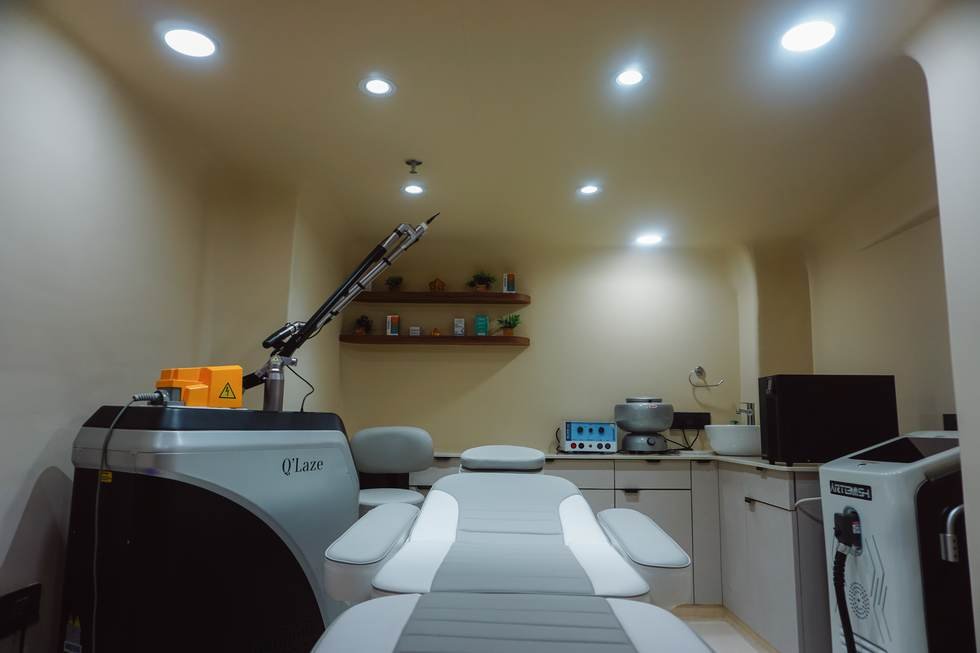
At The Happy Skin Tales, acne scars are not treated as one generic condition.
The skin is examined to distinguish pigmentation from scarring, shallow scars from deep scars, rolling scars from boxcar or ice-pick scars, and old scars from ongoing active acne.
The treatment plan is then selected around what is actually present, not around a one-procedure-fits-all package.
Not Sure Whether You Have Acne Marks or Acne Scars?
A dermatology assessment can help identify exactly what remains after your acne and which concerns genuinely need treatment.
Not Sure Whether You Have Acne Marks or Acne Scars?
A dermatology assessment can help identify exactly what remains after your acne and which concerns genuinely need treatment.
Book a Consultation or call +91 92176 57727Medical Disclaimer: This article is intended for educational purposes and does not replace individual medical consultation, diagnosis or treatment.